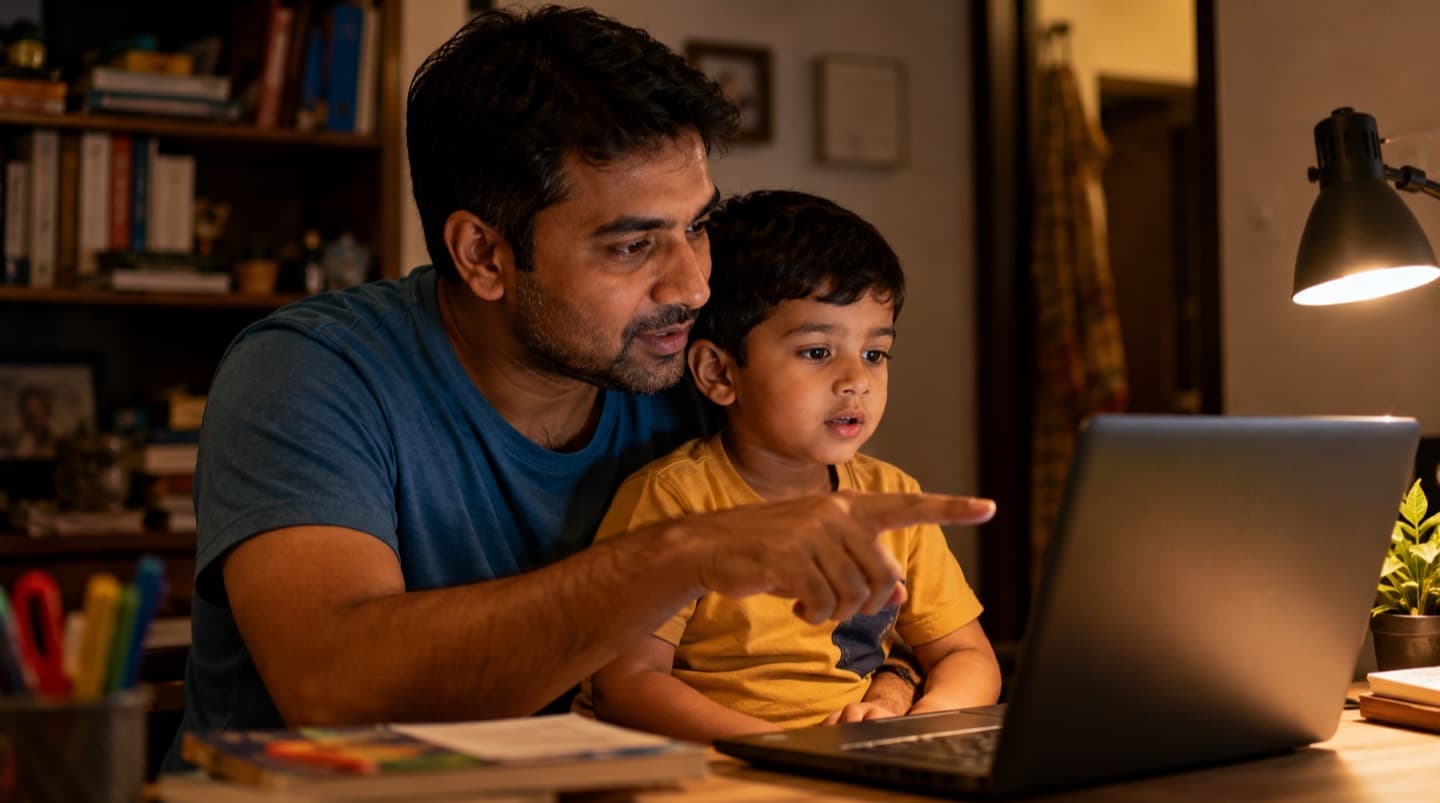
No, not the AI most people mean by the word: chatbots and apps built for adults, open to the whole internet, engineered to keep a user engaged. We build AI for children and would not hand one of those to a four-year-old. The useful question is narrower: what does a tool with AI inside do to the hours it fills?
We should be the last people to ask, or the first. Either way, our honest answer is one most AI companies will not give you, so here it is in full.
Why is the AI in the news the wrong kind for a child?
The chatbots and apps making headlines were built for adults. They will talk about anything, they are wrong with total confidence, they are designed to keep a user in the conversation, and they will happily fill the hours a childhood is supposed to spend elsewhere. Handing one to a four-year-old is handing over the open internet with a friendlier face. That is not a hunch. When Common Sense Media tested AI toy companions in January 2026, more than a quarter of the replies its testers logged included content a child should not hear, from self-harm to drugs. Its conclusion was that no child of five or under should be given one. Fairplay and more than 150 experts went further in November 2025 and told parents not to buy AI toys at all.
So why do we build one?
Because the question hiding inside the question is about design, not about AI. Notice what the warnings are actually afraid of: unlimited content, no adult in the loop, engagement without end, a machine that talks at a child rather than with them, and a toy that pretends to be alive. Every one of those is a choice. Which means every one of them can be designed out, and a company that refuses to design them out is telling you what it values.
A tool with AI inside can be built the opposite way: a closed library instead of the open internet, answers filtered for the age of the listener, a parent who can read every word and delete any of it, no feed, no points, no streaks, and no reason to stay one minute past the fun. It can be a toy that answers a question and then asks one back, so the child does the talking. At that point the question stops being should kids use AI and becomes the question you ask about any toy: what does it do to the hours it fills?
What does the research say children actually need?
The same thing it has said for decades: back-and-forth conversation with a person who answers. The American Academy of Pediatrics asks parents of two to five year olds to keep screens to about an hour of good content a day and to watch together, because a young child learns from media mostly when an adult talks about it with them. Researchers at Harvard call the loop underneath all of this serve and return: the child offers a sound, a look or a question, and an adult returns it. A toy earns its place only if it produces more of that loop, not less. A toy that performs at your child while they watch is a screen without the picture.
How do you judge anything with AI inside?
Five questions, whoever is selling, ours included. Can it reach the open internet? Is every response filtered for your child's age, and can the maker say how? Can you read the full history and delete it yourself? Does the company earn more when your child spends more minutes? And does it talk with your child, in questions and turns, or perform at them? Five good answers is a tool. Fewer is a slot machine with a cartoon on it.
Add one more for a toy that lives in a bedroom: when is the microphone on? The only good answer is when your child says a wake word, and off the rest of the time. Our longer version, with what India's data-protection law now requires of anyone holding a child's data, is the safe AI toy checklist.
Where does Kheelu stand?
Kheelu is built for ages three and up on the opposite design: a closed library, no open internet, an age-graded safety layer on every reply, a full conversation log you can read and delete in the parent app, no ads, nothing sold, and a friend that asks the next question rather than filling the silence. Whether that is enough is your call to make, not ours to declare, and the child-safety groups above are right to make companies earn it. The mechanisms are on our Safety page, in plain words, so you can check rather than trust.
AI near children is not a yes or no. It is a who built this and why. Ask that question loudly and often, and make every company answer it in plain words. Ours are on the Safety page, and if they earn your trust, a refundable ₹499 holds your place.
Sources
- Common Sense Media, Youth AI Safety Institute: AI Toys risk assessment (January 2026) · institute.commonsensemedia.org
- Common Sense Media: press release on the AI toy companion findings (22 January 2026) · commonsensemedia.org
- Fairplay: AI toys are not safe for kids, advisory signed by more than 150 experts and organisations (20 November 2025) · fairplayforkids.org
- American Academy of Pediatrics: Media and Young Minds, policy statement (Pediatrics, 2016) · publications.aap.org
- Harvard University, Center on the Developing Child: Serve and return · developingchild.harvard.edu
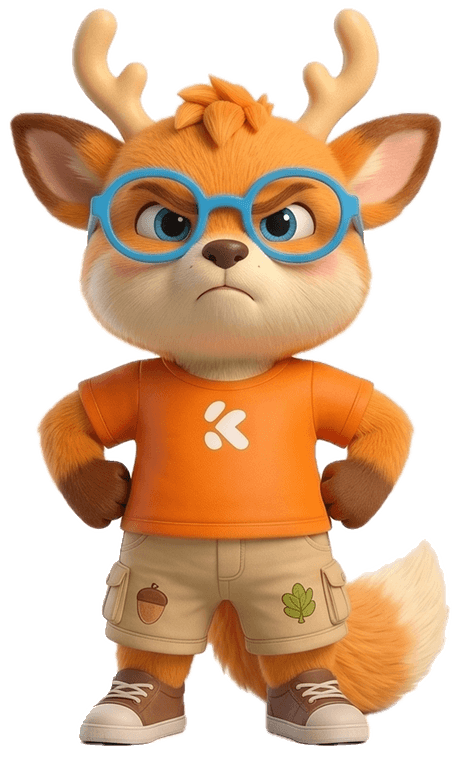
More reads like this on the journal, the mechanisms behind the promises on the Safety page, or meet the friend behind it on the Kheelu page.